🏛️
Usability Testing
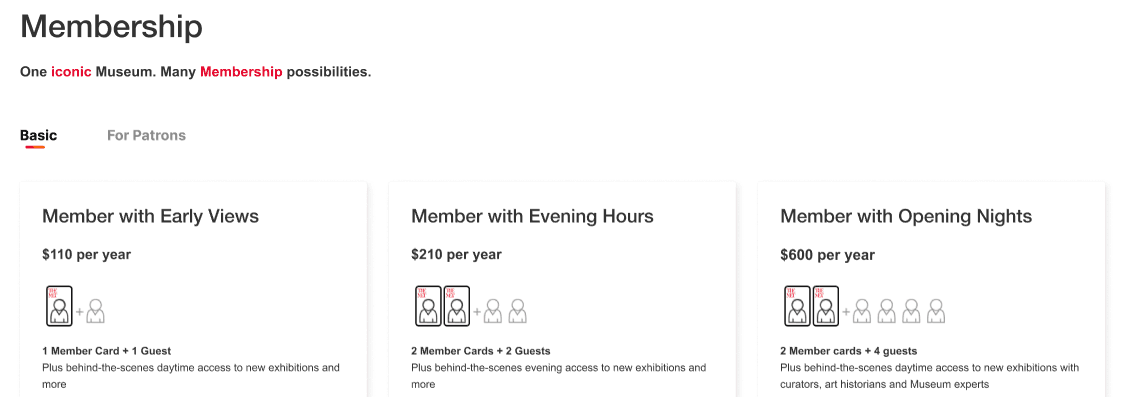
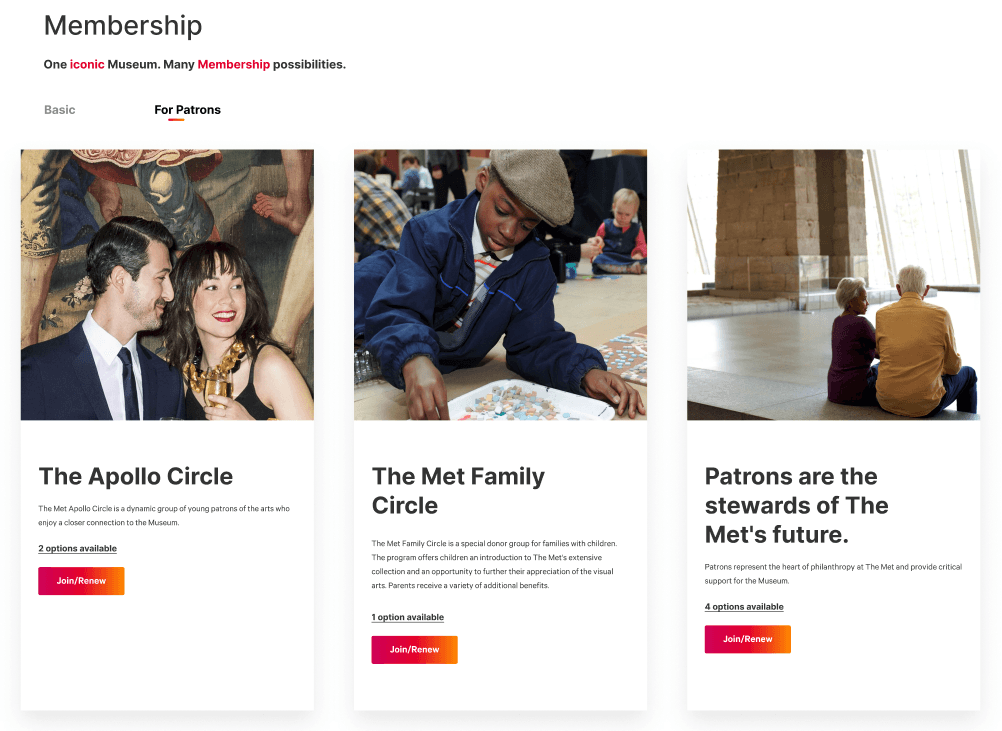
The findings of a user testing report were conducted to assess the user experience of becoming a member of The Metropolitan Museum of Art website.


The Metropolitan Museum of Art is one of the world's largest and most prestigious art museums located in New York City. Offering an extensive collection spanning over 5,000 years of art from around the globe, the Met attracts millions of visitors annually. The Met has developed many membership options to enhance visitor engagement and support, providing exclusive benefits and access to its diverse exhibitions, events, and resources.
Overview
The Met: Becoming a Member
One of The Met mission is a commitment to accessibility, education, and engagement with art and culture. The Met offers a membership program designed to provide exclusive benefits and opportunities for its supporters, ranging from access to special exhibitions and events to behind-the-scenes tours and educational programs.

01
Project Background
We focused on evaluating the user experience of becoming a member of The Met's website. Just as the museum aims to provide enriching experiences for its physical visitors, it is equally essential to ensure a seamless and intuitive online experience for those seeking to become members.
02
Limitation
One possible shortcoming of this methodology is its reliance on remote user testing, which may fail to capture the nuances of the in-person user experience. And the participants may feel the social pressure to achieve less than their best when there are moderators present.
03
My Role
During the project, I worked with my teammate Anita Liao to do the user testing. Based on our findings, several recommendations have been proposed to enhance the user experience of becoming a member of the Met's website.
Our Goals
To ensure a seamless and intuitive online experience for those seeking to become members.
Through a series of remote user tests conducted using UserTesting.com, this study aims to identify potential usability issues, challenges, and areas for improvement within the membership options.
Understand & Define
By simulating the journey of prospective members navigating the Met's website, the research aims to provide valuable insights and recommendations to enhance the digital user experience.
Synthesis + Analysis
Six remote user tests were conducted to evaluate the process of becoming a member of the Met's website, aiming to identify potential issues and provide actionable recommendations for improvement.
Prototype & Recommendation
Based on these findings, several recommendations have been proposed to enhance the user experience of becoming a member of the Met's website.

Methodology
Research Methodology
The remote user tests were conducted through the UserTesting.com platform in an unmoderated and asynchronous manner.
User Research Objectives
The primary objective is to evaluate the usability and user experience of The Metropolitan Museum of Art's (The Met) website, specifically focusing on the process of becoming a member. Additionally, the research aims to identify user preferences, needs, and potential areas for improvement within the membership sign-up process.
Target Users
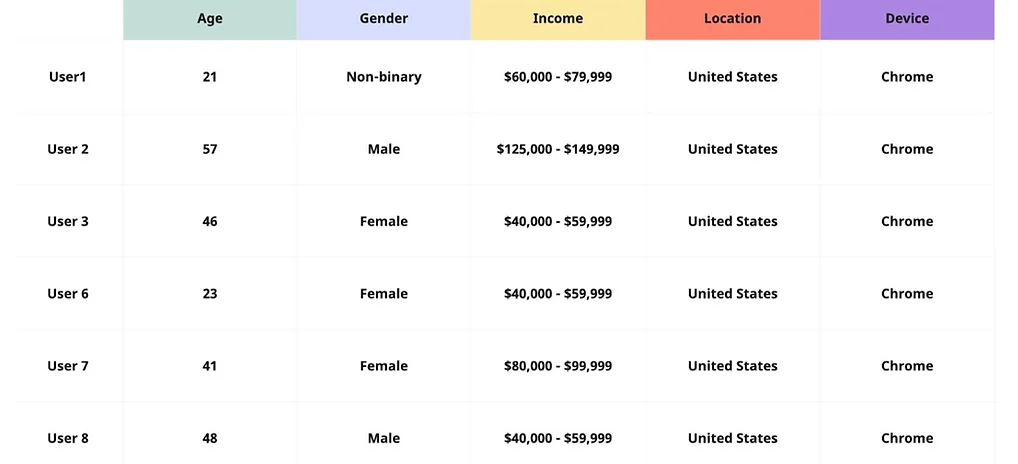
The target users for this research are adults aged 21 and above, with incomes ranging between $40,000 - $149,999. Users should have a general level of computer literacy to navigate the website effectively. We recruits participants from the United States to ensure a feasible representation of potential users.
Limitations
One potential limitation of this methodology is the reliance on remote user testing, which may not fully capture the nuances of the in-person user experience. While remote testing offers the advantage of convenience and accessibility, it may lack the context and environmental factors that could influence user behavior and perceptions (Usability.gov, 2013). For example, participants may encounter technical issues or distractions in their own environments that could impact their ability to complete tasks accurately or provide thorough feedback.
User Testing
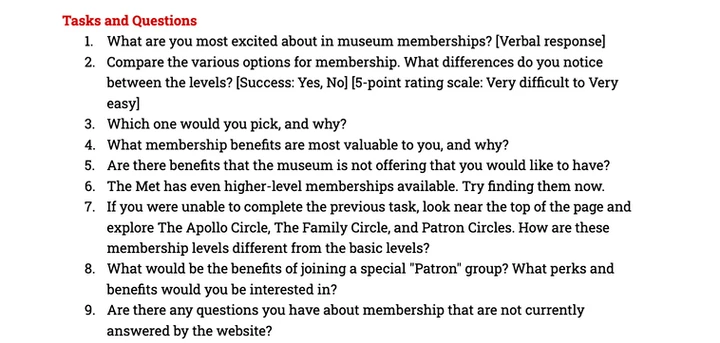
Participants who meet the screening criteria, including age, income, location, and education level, are eligible to participate in the study. During the user testing process, participants were encouraged to provide verbal feedback while completing assigned tasks on the website. They were asked to rate the difficulty of each task on a scale from 1 to 5. Additionally, brief follow-up questions were asked after each task.
Evaluation
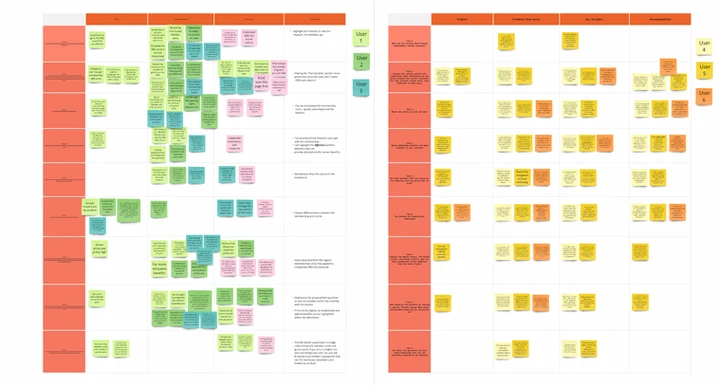
The data collected from participants, including screen recordings, and verbal feedback, were analyzed by the research team to identify usability issues, user preferences, and areas for improvement within the membership purchase process on the Met's website. The findings of the research informed actionable recommendations to enhance the digital user experience and support increased membership engagement with the institution.
We used the affinity map to identify user's behavior patterns. The methodology adheres to best practices in usability testing to ensure unbiased results.
Insights
Key Insights from Research
Through the user testing process, several key insights and challenges were identified. These include:
Findings
Findings
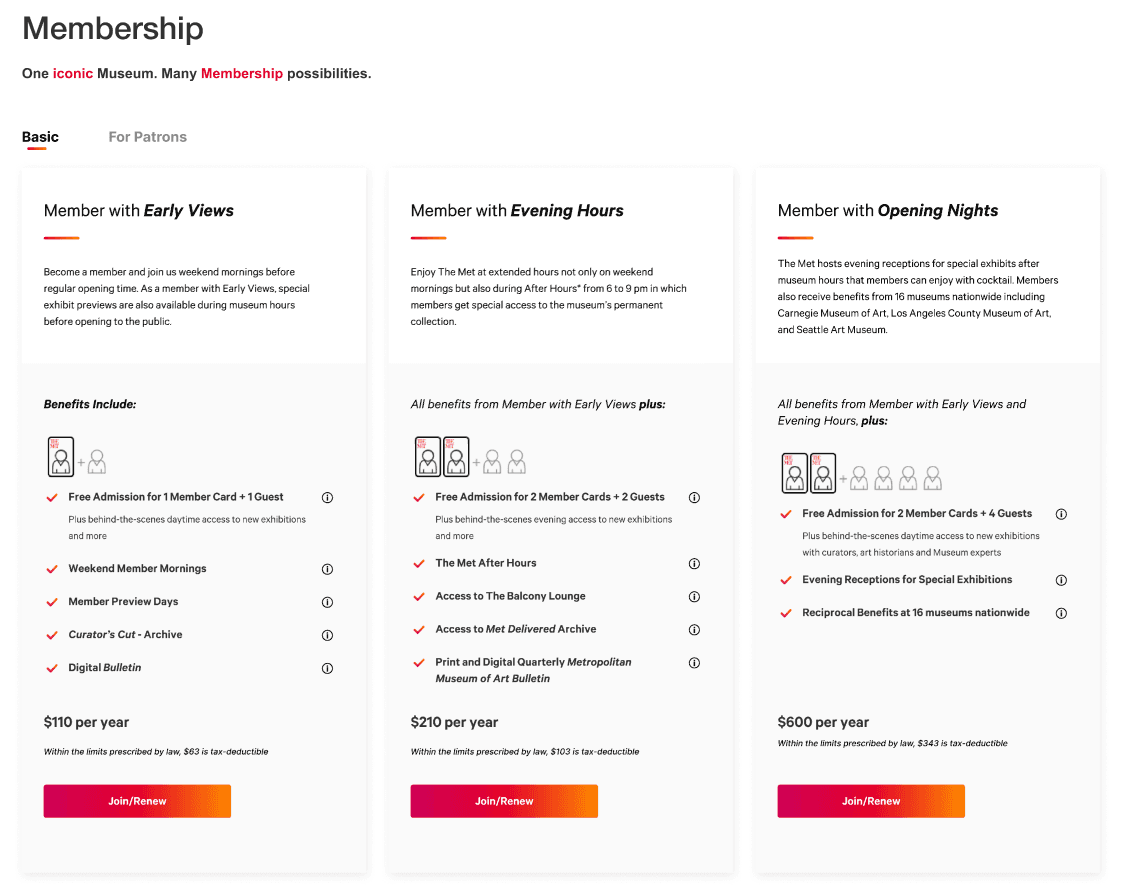
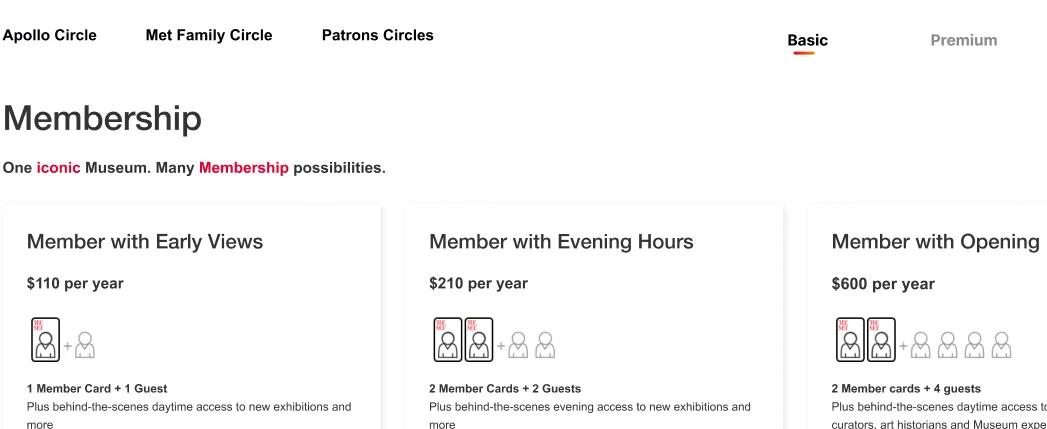
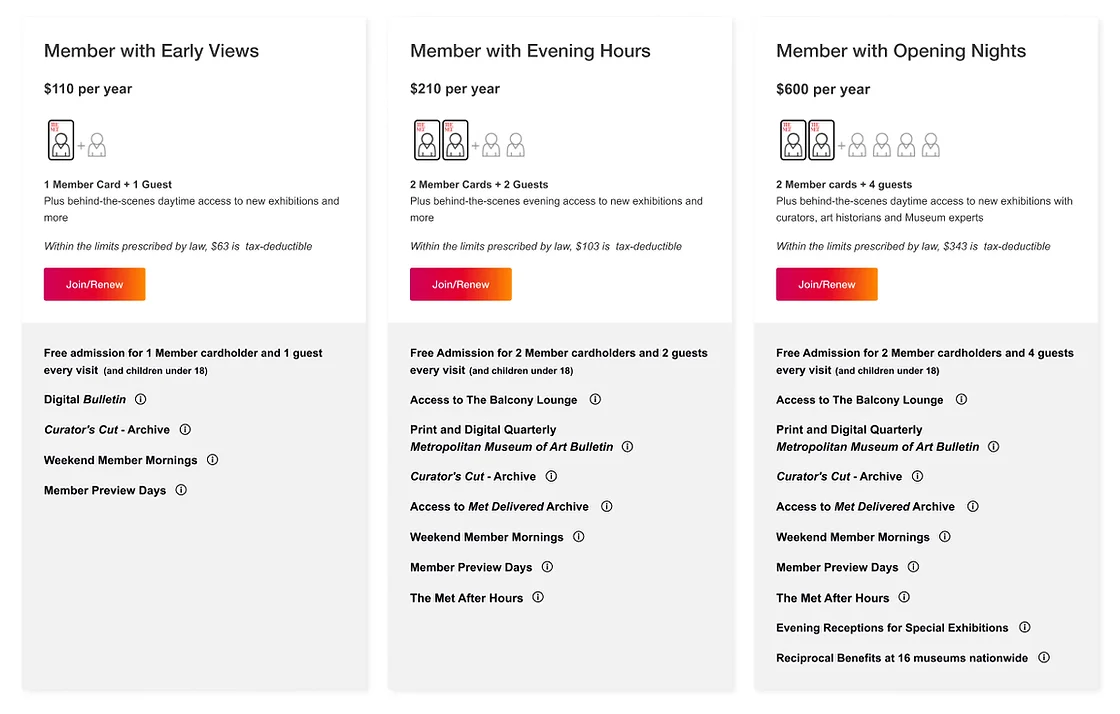
Based on the feedback provided by the users, several overarching problems can be identified.
Design Thinking
Design Principles
We keep the design dialogue, to ensure that we use the following directions of design principles.
Consistency
Distinctive Visual Design and Consistent Layout
Clear Hierarchy
Concise and Descriptive titles
Clarity
Clarity in Membership Benefits to allow users to easily compare features.
Comparison elements
Highlight unique benefits
Omit repeated benefits
Prioirte key benefits
Connected
Highlighting Memberships for Making Users feel more connected.
Visual emphasis
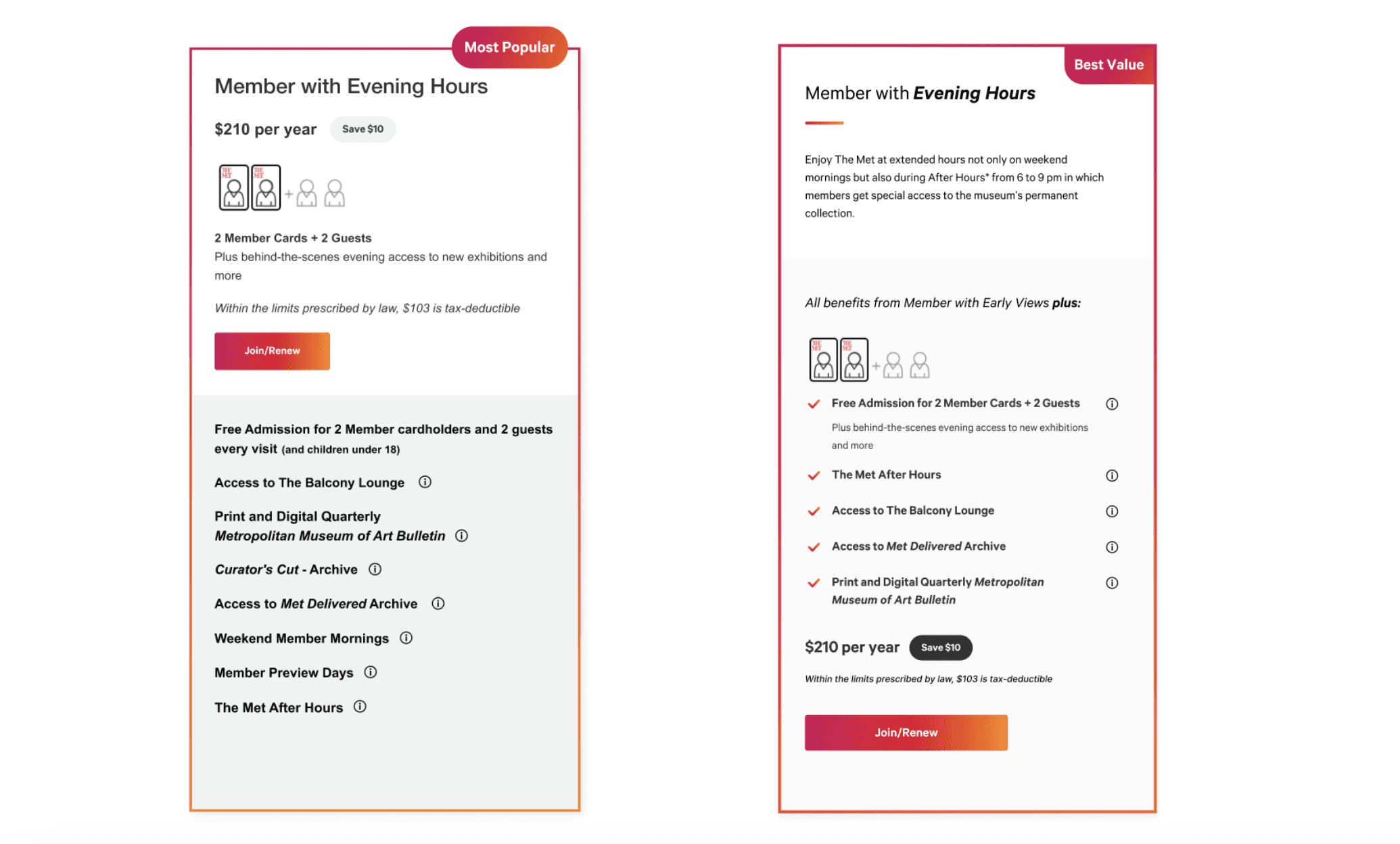
Popular and best value tags
Cost justification
Solutions
Recommendation Hi-Fi:
Based on the feedback provided by the users, several overarching problems can be identified. Here are the corresponding recommendations: